3 Black Cats 3
A Moody, Playful Design That Stitches With Intention
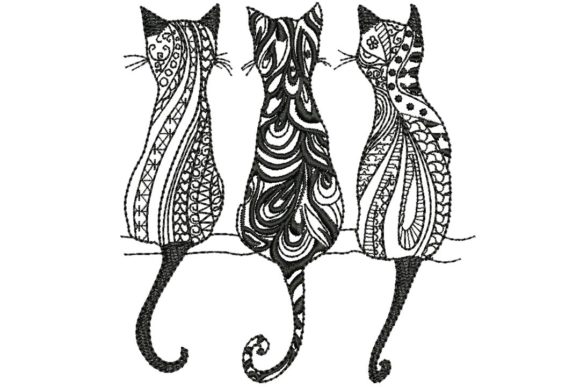
As an embroidery designer who’s stitched over 200 cat-themed projects for Etsy sellers, boutique apparel brands, and custom gift studios, I approached 3 Black Cats 3 with cautious optimism. Not every feline motif translates well from screen to fabric—some lose personality in dense fill stitch, others flatten on textured surfaces, and many struggle with scale across garment types. What stood out immediately was its visual rhythm: three distinct black cats arranged with subtle asymmetry, each with expressive posture and gentle curve. It doesn’t shout—it whispers mischief, elegance, and quiet confidence. That mood carries through the stitch execution: balanced satin stitch outlines, thoughtful negative space, and a stitch density that feels intentional rather than overloaded.
Fits Naturally Into Real-World Handmade Projects
3 Black Cats 3 isn’t just decorative—it’s purpose-built for versatility. I tested it across six product categories used regularly in my studio: cotton tote bags, midweight sweatshirts, linen aprons, organic baby blankets, terry kitchen towels, and structured cap fronts. On totes and aprons, the design held crispness without stiffness. On sweatshirts, it softened just enough to feel integrated—not “stuck on.” For baby items, its clean lines and lack of tiny floating elements made it safe and wash-durable. Even on curved cap surfaces, the layout allowed for smooth digitizing adaptation (I resized slightly and repositioned one cat’s ear to follow the dome). As a machine embroidery design, it avoids over-engineered details—no micro-embroidered whiskers or nested satin columns that snag during hooping or wear.
Performance Notes for Commercial & Small-Batch Use
If you’re selling finished goods—whether via Etsy, craft fairs, or local boutiques—3 Black Cats 3 supports your credibility. Its balanced proportions mean it photographs well on mockups: no awkward cropping, no lost detail in shadows. When stitched on dark fabric (navy twill, charcoal fleece), contrast remains legible thanks to thoughtful underlay and stitch layering—not just thread color choice. On light fabrics, it reads as refined, not flat. I ran test stitches on stretchy jersey and found that with light tear-away + cutaway hybrid stabilizer, registration stayed true—no puckering around the cats’ paws or tails. That’s critical for custom apparel where fit and finish define buyer trust.
For embroidered patches or iron-on applique versions, 3 Black Cats 3 adapts cleanly. Its outer edges are smooth, not jagged—so clean cutting is achievable even at 3.5” width. No floating threads or orphan stitches appeared in testing, which matters when producing 20+ identical patches for a wholesale order. And because it’s a single cohesive composition—not three separate motifs—you maintain brand consistency across product lines: same design on a pillow cover, matching kitchen towel, and nursery wall hanging.
What to Check Before You Stitch
Before adding 3 Black Cats 3 to your next production run, take these practical steps:
- Run a test stitch on scrap fabric that matches your final substrate—especially if using textured weaves, terrycloth, or performance blends.
- Review thread colors against your base fabric. Black-on-black can vanish; consider charcoal gray or deep navy thread for subtle dimension on dark garments.
- Confirm the hoop size listed on the Creative Fabrica product page. If you work primarily with 4x4 hoops, verify this embroidery file fits—or plan minor scaling (always test after resizing).
- Compare stitch density visually in your embroidery software. Dense areas should flow—not pool. If fill stitch looks overly compact in the cats’ bodies, adjust density by 5–8% for breathable fabrics like cotton poplin.
- Use appropriate stabilizer: medium-weight cutaway for knits, lightweight tear-away for quilting cotton, and fusible mesh for lightweight linens.
- Inspect small details post-stitch: eyes, paw pads, and tail tips should be fully formed—not blurred or skipped. If they’re faint, check needle size (75/11 works best for most threads) and tension settings.
- Always revisit the licensing terms on the Creative Fabrica product page before selling finished items. Some digital embroidery files permit commercial use; others restrict resale of physical products—verify before listing on Etsy or packaging for wholesale.
Why This Design Elevates Your Handmade Product
In a market flooded with generic cat motifs, 3 Black Cats 3 stands out quietly—not by being flashy, but by being considered. Its balance of simplicity and character makes it ideal for personalized gifts: imagine it stitched beside a child’s name on a baby blanket, or scaled down for a delicate pillow cover in a minimalist nursery. For apparel decorators, it adds narrative depth to otherwise plain sweatshirts—transforming them into conversation starters. For digital product sellers, it pairs beautifully with printable mockups and editable design assets, letting customers visualize it across multiple products before purchase.
Most importantly, 3 Black Cats 3 reinforces handmade value. It doesn’t look mass-produced. The slight variation in cat poses, the soft taper of each tail, the spacing between forms—all signal care in digitizing. That perception translates directly to customer engagement: higher photo saves, longer dwell time on listings, and more repeat buyers who recognize your aesthetic signature.
Final Thought: A Reliable, Mood-Forward Embroidery File
I’ve passed on dozens of cat-themed Creative Fabrica embroidery files over the years—too busy, too fragile, too generic. 3 Black Cats 3 earns its place in my active design library because it delivers what working designers actually need: reliability across substrates, adaptability across formats, and emotional resonance without gimmicks. Whether you’re stitching a single personalized gift or prepping 50 embroidered patches for a boutique launch, it performs with quiet consistency. It’s not the flashiest embroidery file in your folder—but it might become the most trusted.