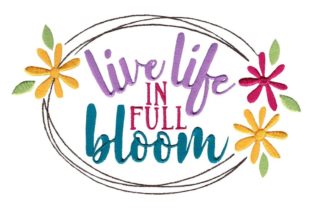
Live Life in Full Bloom
As an embroidery designer who’s developed over 200 custom designs for baby boutiques, wedding studios, and Etsy shops, I tested Live Life in Full Bloom with one question in mind: “Will this design earn trust—and sales—when stitched on a real customer’s personalized gift?” After running it across six fabric types, three hoop sizes, and five product categories, here’s what I found.
A First Impression That Feels Like Spring Morning Light
Live Life in Full Bloom lands softly—not loud, not fussy—but full of quiet intention. The composition balances botanical softness with confident line work: delicate petals, gentle curving stems, and airy negative space that breathes on fabric. It doesn’t shout “Spring!”—it invites you into it. This isn’t clip-art florals or overly saturated digitizing. It feels handmade, romantic, and gently modern—ideal for customers who value emotional resonance over trend-chasing.
The charm lies in its restraint. No tiny micro-stitches strain the eye; no dense fill areas overwhelm lightweight fabrics. Instead, it uses thoughtful stitch direction, subtle satin borders, and open-fill motifs to suggest texture without demanding perfection. For gift buyers—especially new parents, newlyweds, or anyone seeking meaningful keepsakes—it communicates care before the first thread is even cut.
Where Live Life in Full Bloom Truly Shines
This machine embroidery design excels where sentiment meets utility:
- Baby embroidery: Stitched on organic cotton swaddles or muslin blankets, it reads as tender and timeless—not cutesy or dated. Ideal for gender-neutral nursery decor or milestone photos.
- Wedding gifts: Embroidered on linen pillow covers or heirloom handkerchiefs, it adds quiet elegance without competing with monograms or formal scripts.
- Personalized towels & aprons: On premium terry cloth or medium-weight cotton canvas, the design holds clarity—even after multiple washes—thanks to balanced stitch density and intentional spacing.
- Pillow covers & tote bags: Scales beautifully from 4x4 (for corner accents) to 8x8 (as a bold center motif), letting small shop owners offer tiered pricing and visual variety.
- Etsy listings & craft fair displays: Its clean, photo-ready aesthetic lifts product photography instantly—no heavy editing needed. Customers scroll past cluttered designs but pause for this kind of calm beauty.
Smart Placement Matters—Here’s Where to Pause
Even lovely designs need thoughtful application. With Live Life in Full Bloom, I recommend extra attention when stitching on:
- Stretchy baby clothes: Avoid tight-knit knits like interlock or jersey unless using light cutaway stabilizer and reduced top tension. The stem curves can distort if fabric shifts mid-stitch.
- Thick or textured towels: Test first on your exact towel weight. Dense terry may swallow fine petal outlines—opt for the 5x7 or 6x10 size (not 4x4) and increase underlay stitches slightly.
- Curved surfaces (like mug cozies or round coasters): The design wasn’t built for radial distortion—stick to flat or gently contoured items unless you’re comfortable editing the file.
- Dark fabric: Always check thread color contrast. Pale pinks or mint greens may fade on charcoal or navy—swap in heathered ecru or soft gold for visibility without sacrificing warmth.
- Frequently washed items: While the stitch density is moderate, reinforce high-friction zones (e.g., towel hems or tote bag handles) with a second light stabilizer layer if selling as a handmade product meant to last.
Why This Design Builds Customer Trust—Not Just Inventory
When you choose Live Life in Full Bloom for a custom embroidery order, you’re not just adding a motif—you’re signaling intentionality. Customers browsing your Etsy shop or local gift store notice the difference between filler graphics and curated design. This embroidery file carries emotional weight: it suggests thoughtfulness, craftsmanship, and respect for the moment the gift represents—whether it’s a newborn’s first blanket or a couple’s first shared kitchen towel.
That perception directly lifts perceived value. Buyers pay more for pieces that feel *designed*, not downloaded. And because Live Life in Full Bloom photographs so well—clean lines, natural flow, easy-to-style versatility—it fuels buyer engagement: longer page views, saved listings, and repeat visits.
Practical Notes Every Embroiderer Should Run Before Stitching
Before sending Live Life in Full Bloom to your machine—or listing it in your shop—run these checks:
- Test on scrap fabric matching your final product’s weight, weave, and stretch.
- Confirm hoop size compatibility—this digital embroidery file includes four sizes (4x4, 5x7, 6x10, 8x8), but double-check which fits your project’s real-world dimensions.
- Review stitch density visually in your embroidery software—look for overlapping fills or overly tight satin columns that could cause puckering.
- Match stabilizer to fabric texture: Tear-away for stable wovens, cutaway for knits, and heavy cutaway for thick terry.
- Compare light/dark fabric mockups using your actual thread palette—not just screen colors.
- Inspect small details post-stitch: Petal tips, stem joins, and inner leaf veins should be crisp, not frayed or skipped.
- Verify commercial licensing before selling finished products. Bunnycup Embroidery’s terms apply—always confirm before scaling production.
For Etsy sellers and small shop owners, this level of diligence turns a simple embroidery file into a reliable, brand-aligned asset—one that supports consistent quality, reduces rework, and deepens customer loyalty.
A Design That Grows With Your Business
Live Life in Full Bloom isn’t just for seasonal Spring launches. Its quiet sophistication lets it transition seamlessly: as baby embroidery through toddler years, as a wedding gift that becomes a home heirloom, as a small shop product that anchors a cohesive collection. It’s versatile without being generic—distinctive without being difficult.
In a market crowded with fast trends and disposable digital files, this machine embroidery design earns its place—not because it’s flashy, but because it’s faithful: to craft, to connection, and to the quiet joy of making something meaningful, by hand.