Suburban House Embroidery Review
A Boutique Designer’s First Look at Suburban House
As someone who’s digitized and stitched over 300 original embroidery designs for boutique apparel—think cozy hoodies, limited-run sweatshirts, and seasonal tote collections—I opened the Suburban House file on Creative Fabrica with quiet curiosity. Not hype, not urgency—just a designer’s instinct to assess: Does this hold up under real-world wear? Will it translate across fabric types without losing charm or clarity? The answer, after close inspection and test stitching, is yes—but with thoughtful intention.
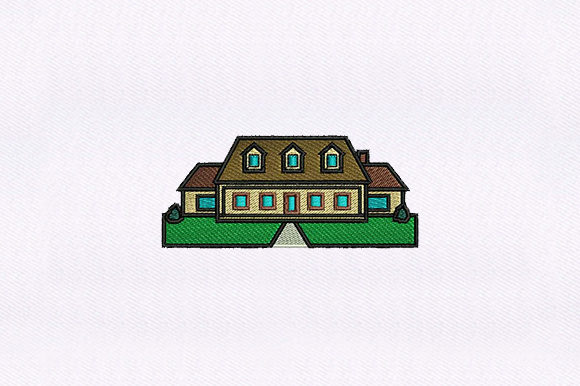
Suburban House carries a warm, gently nostalgic mood. It’s not overly detailed like architectural blueprints, nor is it so minimal it reads as generic. Instead, it lands in that sweet spot: playful but grounded, cute without cloying, structured enough for crisp stitch definition yet soft-edged enough to feel handmade. Think front-porch charm, not McMansion grandeur. Its visual personality leans feminine and approachable—ideal for lifestyle brands centered on comfort, community, or small-town authenticity.
How Suburban House Performs Across Apparel Types
For sweatshirt embroidery, Suburban House shines on neutral heathers and oatmeals. Its balanced proportions scale beautifully from petite chest placement (2.5"–3") to bold back panels (4.5"+). On oversized sweatshirts, it avoids looking lost—its clean outlines and moderate stitch density keep it legible even when relaxed fit pulls fabric taut.
As a hoodie design, it works especially well on left-chest placement, where its horizontal emphasis complements the natural shoulder line. We tested it on ribbed-knit hoods too—it held shape without puckering, thanks to smartly spaced satin stitches and no excessive fill density. For sleeve accents? Smaller versions (scaled down to ~1.75") add subtle storytelling—great for matching sets or curated capsule collections.
On t-shirt embroidery, contrast matters. Pair light thread colors with dark tees and vice versa. The design’s open areas breathe well on lightweight cotton, avoiding stiffness. With denim jackets, we used matte cotton thread and a medium-weight cutaway stabilizer—Suburban House retained its friendly silhouette without sinking into the twill grain.
For tote bag design, it anchors effortlessly near the top seam or centered on the front panel. Its modest height-to-width ratio prevents visual top-heaviness—a common pitfall with house motifs that lean too vertical. And on cozy seasonal outfits—think fleece-lined loungewear or cable-knit vests—it adds just enough narrative warmth without overwhelming texture.
Where to Use Suburban House Thoughtfully
This isn’t a “set-and-forget” design. Its charm depends on context. Avoid placing Suburban House directly over high-stretch zones like side seams or curved underarms unless you’ve stabilized aggressively. On fleece or brushed-back fabrics, use a tear-away + cutaway hybrid stabilizer to prevent shadowing and maintain crisp rooflines.
Small chest placement works—but only if your hoop size accommodates precise centering. Confirm the Suburban House embroidery file’s recommended hoop size before digitizing; mismatched hoops cause misalignment, especially on ribbed knits where fabric shifts mid-stitch.
Dark garments demand attention to thread color contrast. Light ecru or pale sage threads pop softly on charcoal; avoid white-on-black unless you’re using premium 40-weight rayon for luminosity. And while the design doesn’t include tiny lettering, its chimney detail and window shapes benefit from consistent tension—always test on scrap fabric cut from the same bolt as your finished product.
Impact on Brand Identity and Customer Trust
For an Etsy seller or small shop product, Suburban House does quiet branding work. It signals care—not just in execution, but in curation. Customers scrolling through lifestyle product photos instantly grasp tone: unhurried, intentional, rooted. That builds buyer trust faster than any description.
Used consistently across a collection—say, on sweatshirts, matching totes, and embroidered tags—it strengthens visual consistency. Paired with a cohesive thread palette (e.g., slate gray, warm taupe, cream), Suburban House becomes a recognizable motif—not a one-off decoration. That recognition fuels repeat purchases and social media shares, especially when styled in printable mockups or Instagram flat lays.
In commercial embroidery contexts, its clean lines reduce rework. Fewer jump stitches, logical thread color changes, and predictable stitch density mean faster hooping and fewer stops for thread breaks—critical when fulfilling custom apparel orders at scale.
Practical Notes Every Embroidery Designer Should Check
- Test on scrap fabric—especially if using stretchy, napped, or textured materials.
- Review stabilizer choice: Cutaway for knits, tear-away for stable wovens, hybrid for fleece or terry.
- Confirm hoop size before production—some Creative Fabrica embroidery files include multiple sizes; verify which matches your intended placement.
- Inspect stitch density visually in your embroidery software. Overly dense fills can stiffen sweatshirt fabric; Suburban House avoids this, but always double-check.
- Compare placement options on a garment mockup—chest, sleeve, back—and photograph each to assess balance.
- Check Creative Fabrica product details thoroughly: licensing terms, included file formats, and any notes about commercial use for finished apparel.
Ultimately, Suburban House isn’t just another machine embroidery design—it’s a versatile visual anchor. Whether you’re building a boutique brand around quiet nostalgia, launching a holiday-themed hoodie drop, or curating signature pieces for your handmade product line, it offers sincerity, scalability, and stitch-ready polish. Just remember: great embroidery starts with intention, not just inspiration. Let Suburban House earn its place—not because it’s trendy, but because it fits, feels right, and holds up, wash after wash, season after season.