Widdle Wonder Halloween 2
A Friendly, Festive Bear That Stitches With Charm — Not Chaos
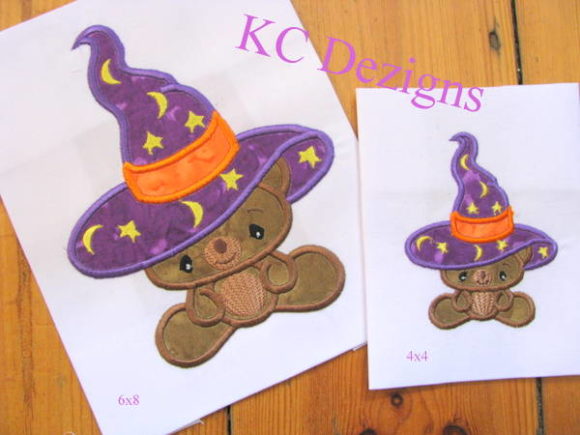
As someone who’s stitched hundreds of Halloween designs for clients, Etsy shops, and boutique merchandise, I opened Widdle Wonder Halloween 2 expecting another cute-but-crowded bear motif. Instead, I found something refreshingly balanced: a round-faced, wide-eyed bear wearing a tiny witch hat and holding a candy corn — playful without being cutesy, detailed without being dense. It reads instantly as Halloween, but not in a way that feels dated or overly literal. That matters when you’re designing for real people who want whimsy, not caricature.
How It Landed on My Tote Bag Mockup (and Why It Stuck)
Last week, I prepped a small-batch run of organic cotton tote bags for a local gift shop’s October launch. I tested Widdle Wonder Halloween 2 centered on the front panel — roughly 4.2" wide — and immediately noticed how well its proportions held up. The bear’s face has enough satin-stitched definition to read clearly at that size, while the candy corn and hat use smart fill stitch gradients instead of fussy outlines. No thread nesting in the corners. No floating stitches. Just clean, confident embroidery that looked handmade — not machine-made.
That’s critical for small shop owners: customers don’t buy “stitch count.” They buy charm, clarity, and confidence in your craft. And this design delivers that quietly — no shouting, no glittery overkill.
Where It Shines (and Where You’ll Want to Pause)
Widdle Wonder Halloween 2 works beautifully on:
- Sweatshirt embroidery — Its moderate stitch density holds up on midweight fleece without puckering, especially with light tear-away stabilizer.
- Tote bag design — The rounded shape fills space gracefully and avoids awkward stretching across seams or gussets.
- Baby embroidery — Soft curves, no sharp angles or tiny detached elements (like dangling legs or separate bow ties), so it’s safe and soothing for onesies and burp cloths.
- Embroidered patch — Clean outer edges and consistent stitch direction make it ideal for heat-applied or sew-on patches.
- Holiday gift items — Think pillow covers, tea towels, or aprons where warmth and approachability matter more than spooky intensity.
But be thoughtful with:
- Thin or stretchy fabric — Like lightweight jersey tees. The bear’s facial features rely on controlled satin stitch; without proper cutaway stabilizer and careful hooping, those eyes can blur.
- Curved surfaces — Caps and beanies need re-hooping or smaller-scale versions. As-is, Widdle Wonder Halloween 2 is best suited for flat or gently contoured areas.
- Dark fabric backgrounds — Test thread colors early. The design uses subtle tonal shifts in the fur and hat — they vanish on black unless you choose high-contrast threads (e.g., ivory on charcoal, not beige).
- Small hoop sizes under 4" — While scalable, shrinking too far risks losing the expressive shape of the bear’s ears and smile. Keep it above 3.5" for legibility.
What This Design Says About Your Brand — Before a Single Stitch
When you choose Widdle Wonder Halloween 2 for your craft business or Etsy listing, you’re signaling warmth, attention to detail, and intentionality. It doesn’t scream “Halloween!” — it invites. That builds trust, especially with parents ordering personalized baby gifts or boutique buyers curating seasonal collections.
I’ve seen too many holiday embroidery files that look great on screen but fall apart in thread — tangled satin zones, jagged fill transitions, or lettering so tight it frays after one wash. Widdle Wonder Halloween 2 avoids those pitfalls. Its stitch paths flow logically, its density feels even, and there’s breathing room between elements — no visual crowding, even when stitched densely.
That translates directly to product value. A cleanly stitched bear on a linen tea towel feels like a considered heirloom piece. A muddy, over-stitched version feels like filler. This design helps you land on the right side — every time.
Practical Designer Notes Before You Stitch
Before adding Widdle Wonder Halloween 2 to your next project or digital product bundle, do these five things:
- Test on scrap fabric first — Especially if using textured weaves (like burlap blends) or knit blends. Watch how the bear’s cheeks and hat brim settle.
- Check thread color contrast — Run a quick black-and-white mockup to see how readable the features are without color cues.
- Review stitch density in your embroidery software — Look for any unusually tight clusters near the eyes or candy corn tip. Adjust if needed for your fabric weight.
- Confirm hoop size compatibility — The file likely fits standard 4x4 hoops, but verify before loading onto your machine.
- Inspect licensing terms — Since this is a machine embroidery design, confirm whether it’s cleared for commercial use on finished products (like embroidered sweatshirts sold in your shop) or digital resale (e.g., as part of an embroidery bundle). When in doubt, contact the creator.
Final Thought: A Design That Feels Like a Conversation, Not a Decoration
Good Halloween embroidery doesn’t have to be loud to be memorable. Widdle Wonder Halloween 2 proves that — it’s a quiet standout. It’s the kind of design that makes a customer pause at your booth, smile, and say, “Oh, that bear! I’d buy that for my niece.” That’s the power of thoughtful execution: it turns a simple embroidery file into emotional resonance.
Whether you’re stitching custom apparel for a school fundraiser, building digital design assets for fellow crafters, or launching a line of handmade holiday gifts, this bear earns its place. Not because it’s flashy — but because it’s faithful: faithful to the season, to your skill, and to the people who’ll hold your finished product in their hands.